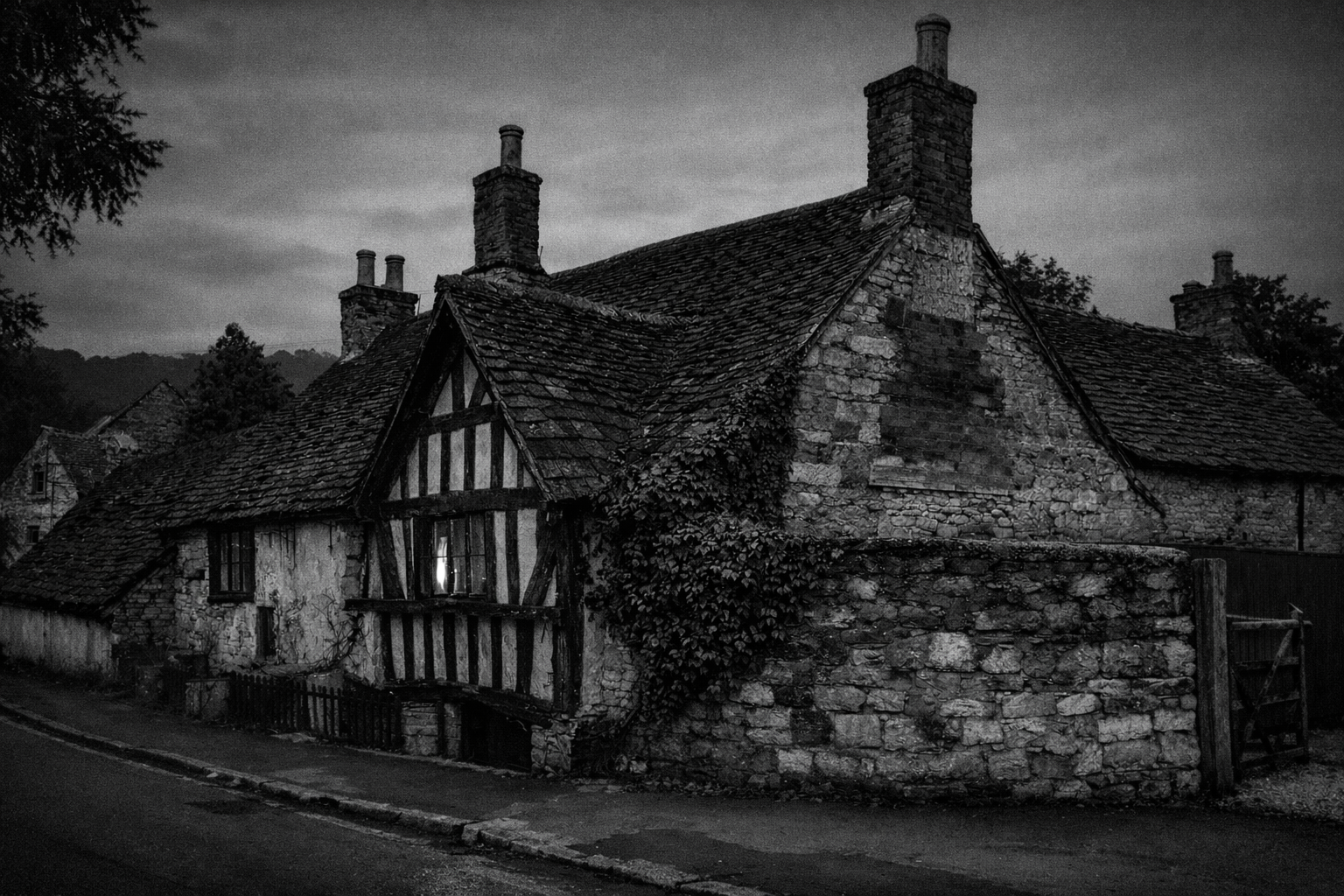
In the quiet Gloucestershire town of Wotton-under-Edge stands a timber framed building that looks as though it has endured more than most places ever should.
The Ancient Ram Inn is believed to date back to around 1145. Its origins are closely linked to the construction of nearby St Mary’s Church, where it is said to have housed masons and workers during the medieval period. That places its foundations in a time when England was ruled by faith, superstition and deeply held belief in the unseen.
Nearly nine centuries later, the building still stands.
Its frame leans slightly with age. The timber beams are thick and dark, bowed under the weight of centuries. The ceilings sit low, as one would expect. The floors slope gently beneath your feet, a quiet reminder that this house was built long before modern tools demanded straight lines.
Over time, the building has served as a priest’s house, an inn and eventually a private residence. Each generation left its mark, and with each passing century, stories gathered around it.
There have long been claims that the land beneath the inn holds older significance. Some believe it stands on ground once associated with pagan ritual. Others speak of ley lines crossing beneath the building. Whether these beliefs stem from early practice or later folklore, they are now firmly woven into the inn’s identity.
Its modern reputation, however, began in 1968 when John Humphries purchased the property.
Humphries claimed that shortly after moving in, he experienced violent disturbances. He spoke openly about being pushed and dragged by unseen forces. He described dark presences occupying specific rooms within the house. Rather than leave, he stayed for decades, allowing paranormal investigators and visitors to experience the building for themselves.
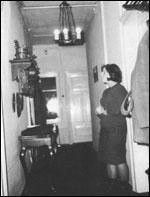
Over the years, countless people have stepped inside its low doorways. Many have reported sudden cold patches, unexplained touches, heavy atmospheres and the strong sense of being watched.
Certain rooms have become central to its legend.
The Bishop’s Room is believed to be among the oldest sections of the building. Visitors often describe it as oppressive, as though the air settles differently there.
Then there is the Witch’s Room.
Local legend connects the room to a woman accused of witchcraft. Over time, reports of a female presence have become part of its identity. Some visitors speak of feeling pressure in the room. Others describe scratches appearing on their skin or the sensation of being pushed.
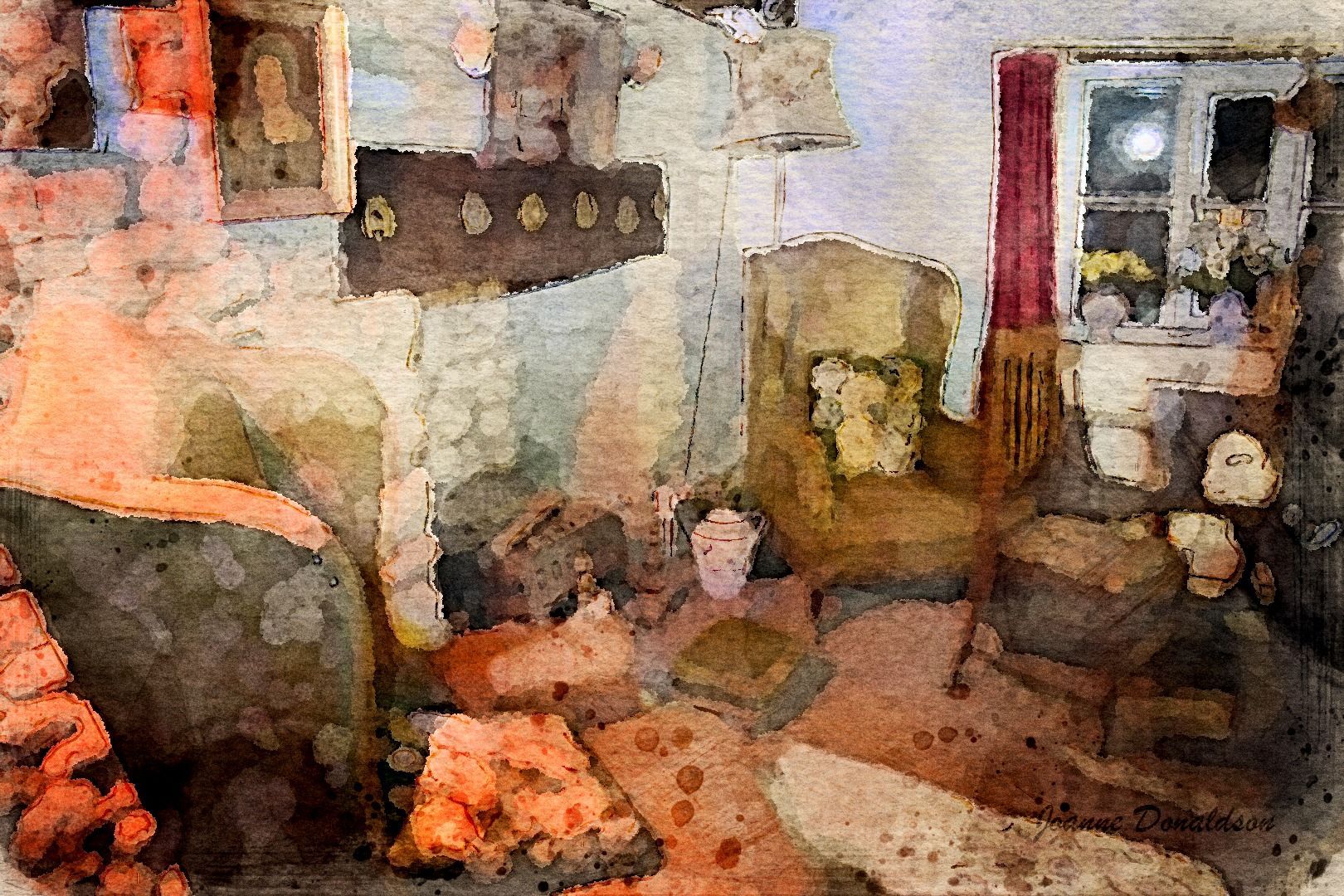
The room itself is big enough to contain a double bed and a table with chairs, not a small room by any means. Light from the aged windows disappear quickly as evening approaches. Shadows settle early and linger long, casting shapes on every surface.
The Ancient Ram Inn does not rely on polished presentation. It is not softened by restoration. It feels aged. Weathered. Unapologetically old.
And that becomes most apparent at night.
Spending a Night at the Ancient Ram Inn
The key feels heavier than expected when it is handed over.
The front door closes with a solid wooden thud, and suddenly you are inside a building that has stood since the twelfth century.
Outside, cars pass along the road that curves around the inn. Headlights sweep briefly across the stone walls and small windows before disappearing again. The world continues moving just beyond the glass.
Inside, the building feels different.
Not silent. Just still.
As darkness settles properly, the atmosphere shifts. The small windows allow very little light. Corners deepen. The timber beams cast uneven shapes across the ceiling. Every sound carries further than it should.
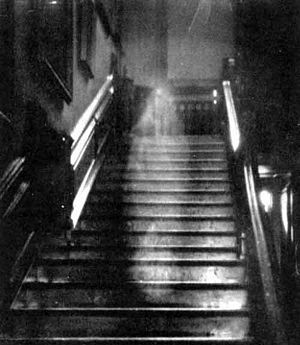
A footstep on the staircase echoes heavily. The wood creaks in response to subtle changes in temperature. From time to time, the distant hum of a passing car reminds you that modern life is only a few feet away. Yet inside the rooms, the sense of age presses in.
You step into the Witch’s Room and close the door.
The space feels close. The air unmoving. Visitors over the years have spoken of unease here, of a presence that feels distinctly female.
You sit and listen.
There is the building itself. The faint shift of timber. A quiet knock somewhere distant that cannot immediately be placed. The staircase responding as though someone has just stepped onto it.
Midnight passes without ceremony.
The darkness inside the room feels textured, not empty. You become aware of your breathing, of your heartbeat, of the simple fact that you are lying within walls that have stood for nearly nine hundred years.
Faith.
Fear.
Accusation.
Belief.
The inn has witnessed all of it.
Around the early hours, when the road outside quietens between passing cars, the stillness inside feels heavier. Not violent. Not theatrical. Just watchful.
Some who have stayed overnight describe feeling suddenly threatened, convinced someone is standing near them. Others speak of unexplained touches or the feeling of pressure in the room. Tappings from walls and floors seem to answer on command as if trying to communicate.
You sit still, listening.
The night stretches.
When dawn finally reaches the edges of the window, grey light softens the beams and the room appears almost ordinary again.
Almost.
You step back onto the uneven staircase and make your way downstairs. Outside, traffic resumes its steady rhythm. The village continues as it always has.
The Ancient Ram Inn remains where it has stood since 1145. Timber bowed. Stone weathered. Reputation intact.
Spending a night there does not guarantee spectacle but it does guarantee a deep awareness of the past. An almost tangible atmosphere that is difficult to describe.
What it offers is something quieter.
A sense that history lingers within old wood.
That stories settle deep into stone.
And that some buildings do not easily let go of the centuries they have absorbed.